Connect your inbox and ERP.
Invoices flow in from email or your accounting system. No rip-and-replace — InvoiceGraph sits on top of the AP tools you already pay for.


AP automation · built on MIND
InvoiceGraph reconciles every invoice against your vendors' full history — contracts, prices, every past dispute — and surfaces overcharges, duplicates, and contract violations before you pay. It gets smarter about your vendors every single night.
Built on MIND · You approve every payment · No rip-and-replace
Every tool can read an invoice. Almost none check it.
So the overcharge clears, the duplicate pays twice, and a quarter later an auditor maybe finds it.
Market figure: Grand View Research, Accounts Payable Automation Market, 2024–2030. Sample-run figure is an illustrative reconciliation on synthetic invoices, not a customer result.
How it works
Invoices flow in from email or your accounting system. No rip-and-replace — InvoiceGraph sits on top of the AP tools you already pay for.
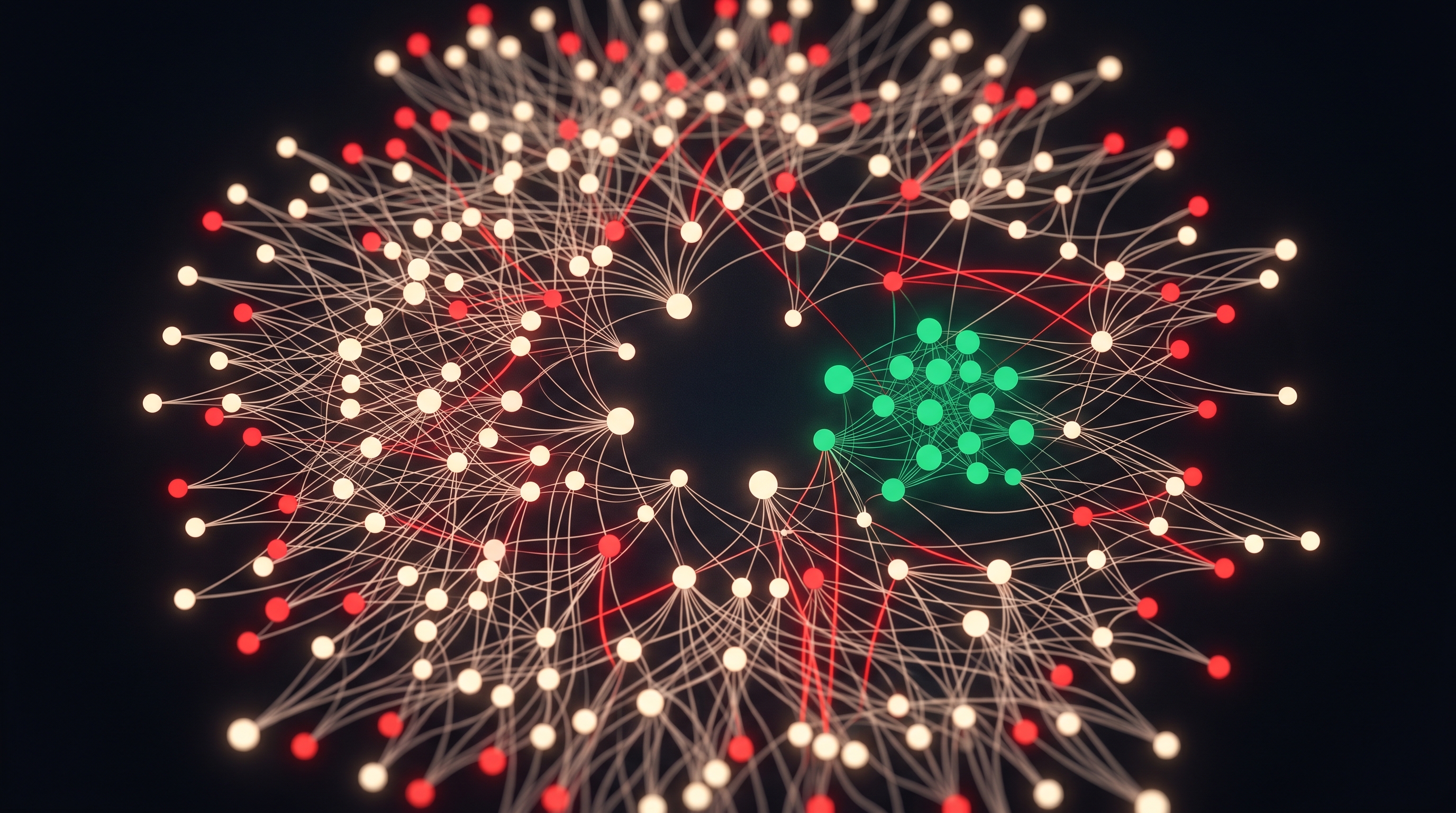
Every contract, price, and past invoice becomes a connected node in your own private MIND graph — the memory a stateless OCR tool can never have.
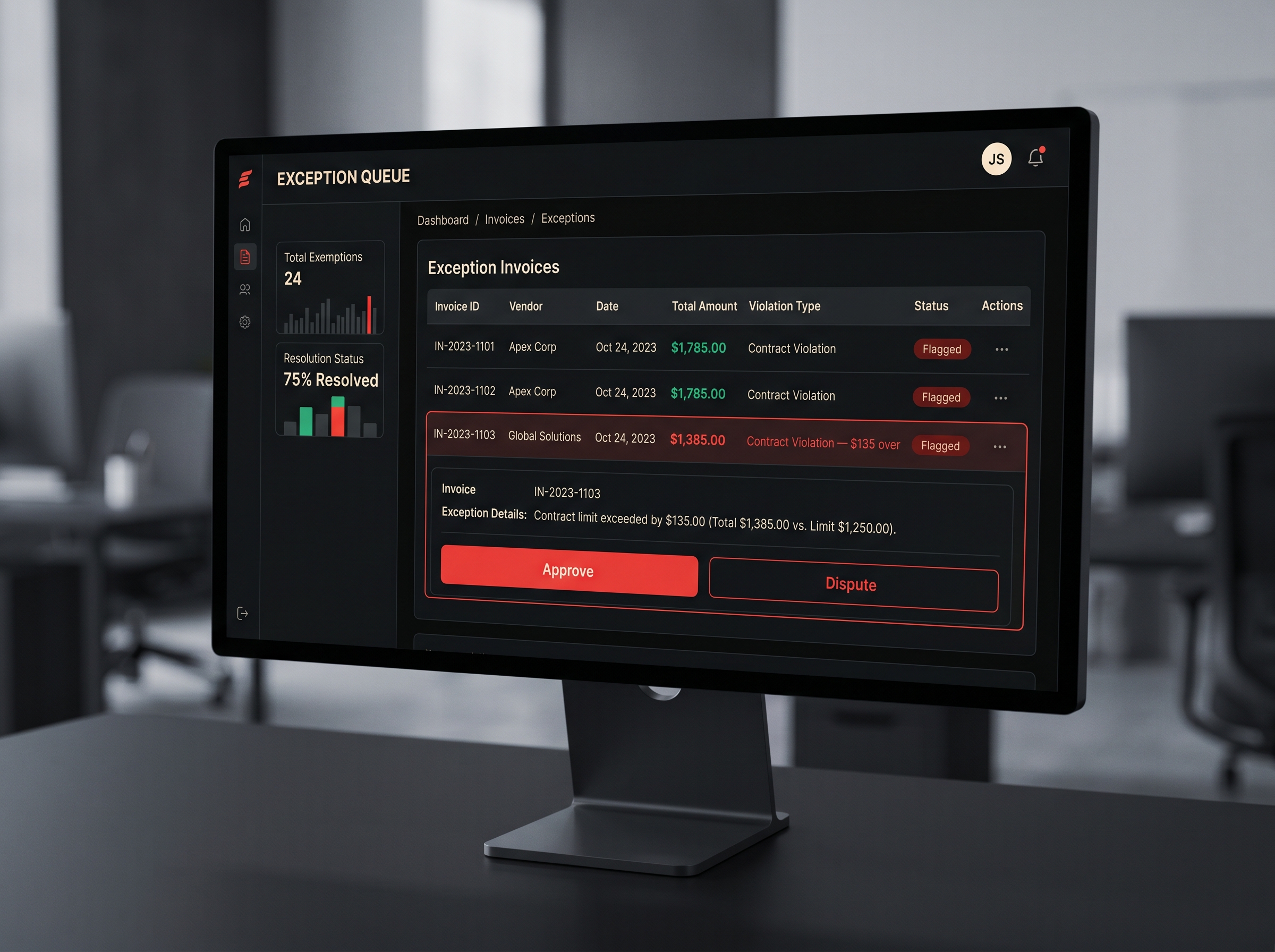
Each line is judged against that history. Overcharges, duplicates, and violations land in a one-click queue — with the exact dollar at stake. You approve; nothing pays itself.
What it catches
Capture tools stop at "what does this invoice say." InvoiceGraph asks the only question that saves money: is this number wrong, and by how much?
A line billed above the contracted or PO price — caught with the exact dollar delta, cited to the contract it broke.
The same invoice resubmitted, or a near-match weeks later — flagged before you pay a vendor twice for one job.
A vendor quietly creeping a unit price above everything they've ever charged you — surfaced against their own track record.
More units billed than the purchase order ever authorized — with the overage priced out to the dollar.
The graph
Capture is commoditized — every tool can read an invoice, and most give it away for free. InvoiceGraph reads the relationship: this vendor, this SKU, this contract, every price they've ever charged you. The graph is the part that compounds — and the part no one can copy.
The principle
Anyone can extract text from a PDF. The money is in knowing whether the number is wrong — and that only comes from memory.
The intelligence
Every InvoiceGraph tenant has its own private intelligence, built on Astra AI's MIND. The longer it runs, the better it knows your vendors — fewer false flags, more caught money, a straight-through rate that climbs week over week. This is the part that compounds. It is the part no one can copy.
Built by Astra AI
InvoiceGraph is built by Astra AI on MIND — our knowledge-graph platform that gives software a memory that compounds. It's the same engine that lets every InvoiceGraph tenant grow more attuned to its own vendors. We didn't start with an OCR model; we started with a conviction: software should catch what a sharp controller would — by remembering everything, and forgetting nothing.
Why InvoiceGraph
| Capability | InvoiceGraph | Capture tools (Ramp, Bill.com) | Manual 3-way match |
|---|---|---|---|
| Reads the invoice | Yes | Yes | By hand |
| Checks it against the contract & price history | Yes | No | If someone remembers |
| Catches duplicates across weeks, not just batches | Yes | Within a batch | Rarely |
| Surfaces the exact dollar at stake | Yes | No | Eventually |
| Gets smarter about each vendor over time | Yes | No | No |
| Human approves every payment | Yes | Yes | Yes |
Comparison reflects InvoiceGraph's design intent versus common categories of AP tooling — not a claim about any specific product's current feature set.
Pricing
A platform fee, a few cents an invoice, and a share of what we actually recover. The platform cost is a rounding error against the first duplicate we catch.
The vendor graph, reconciliation engine, exception queue, and nightly learning loop — on your own MIND tenant.
Beyond 1,000 invoices a month — plus 15% of verified recovered dollars in the first 90 days (capped). You pay out of money you'd otherwise lose.
Sign up and send your first branded invoice in minutes. Bring your own send key and bill from your own domain. Upgrade only when the graph is finding you money.
Questions
No. InvoiceGraph sits on top — it reads invoices from your inbox or ERP, flags the problems, and hands clean ones back. You keep your payment rails and your existing tools.
Never. InvoiceGraph produces verdicts and a one-click approve/dispute queue. Your ERP executes payment only after a human approves it. We never touch the payment rail.
Capture is commoditized — everyone can read an invoice. InvoiceGraph's value is the graph: it checks every line against the vendor's contracts and full price history and tells you the exact dollar that's wrong, with a cited reason.
In your own private MIND tenant. Your vendors, prices, and disputes are never pooled with anyone else's and never sold. The graph — and the learning it produces — is yours.
The pilot starts with a retro audit: we run your last ~1,000 invoices through the graph and show you what it would have caught, in dollars, before you commit to anything live.
A $499/month platform fee per entity, $0.40 per invoice beyond 1,000/month, and 15% of verified recovered dollars in the first 90 days (capped). The platform fee is a rounding error against the first duplicate we catch.
Let InvoiceGraph read every invoice against the truth — before the money leaves the building.